Oshadhiparvata - MEDICINAL PLANTS CULTIVATION IN HIMALAYAN VALLEY
The initiative to cultivate herbs in the Himalayan Valley basin is a commendable effort. Ayurveda
indeed
highlights the Himalayan and adjacent regions as natural habitats for herbs, emphasizing their
potency compared to other areas in the sub-continent. This strategic choice of location aligns with
Ayurvedic wisdom and ensures that the herbs cultivated will have a higher medicinal value.
Additionally, focusing on the Himalayan Valley basin for herb cultivation not only supports the
sustainability of these valuable resources but also contributes to the goals of self-reliance and
the promotion of indigenous knowledge and practices, as envisioned in the "Aatmanirbhar Bharat"
initiative.
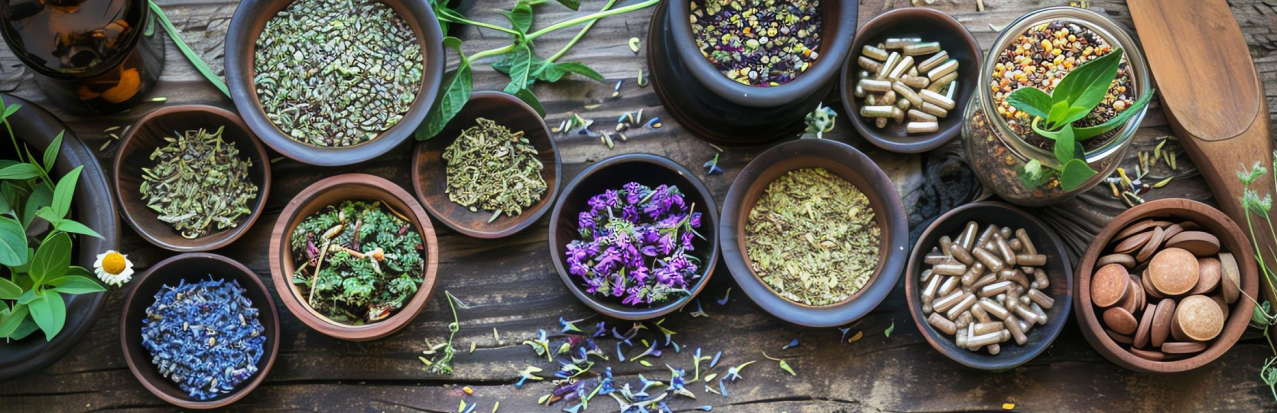
This project represents a significant step toward harnessing India's natural wealth for the benefit
of healthcare and sustainable development. India is the origin of herbal medicines since Vedic
period and Ayurveda is one of the most ancient sciences using herbs in healthcare. Last two
centuries have witnessed global industrialization and last 2 decades have seen a huge resurgence in
herbal industry as well. India is one of the major end users as well as exporter of several herbs.
In many countries herbs are imported for several purposes including medicinal use but they follow
very stringent rules for import with respect to quality and safety. This increasing demand has made
over-exploitation of the natural resources herbs and have endangered several potent herbs. Though
herbs have now gained much importance, a sustainable model for revival as well as maintenance of
reserves is highly required. Increasing popularity of herbal medicines, phytopharmaceuticals, herbal
foods, herbal cosmetics, etc. have increased the demand of herbs alarmingly and such huge demand can
only be catered by herbal cultivation and active participation of government bodies.
The "Himalayan Valley: The First Herbal Valley of the World" project, emerges as a visionary
initiative
with a robust rationale deeply rooted in the principles of self-reliance, environmental
sustainability, and community development. Analyzing the historical trajectory of medicinal plant
ecosystems reveals alarming threats to biodiversity, habitat degradation, and the endangerment of
various plant species with significant medicinal value. Uttarakhand, with its rich biodiversity and
favorable climate, becomes the canvas for this transformative project aimed at cultivating medicinal
plants. The region, abundant with 701 out of 1,748 medicinal plant species found in the Indian
Himalayan region, presents an opportune landscape for fostering botanical wealth. This project
strategically focuses on the Himalayan Valley basin, aligning with Ayurvedic wisdom and contributing
to
biodiversity conservation. The cultivation of herbs not only addresses environmental challenges but
also serves as a diversified income source for rural populations. The rationale lies in the
convergence of ancient wisdom, modern science, and socio-economic development.
Folklore - Surya, the sun god, fell in love with a beautiful woman while travelling across the
skies. Unable to stop his journey he was stricken and began to waste away. Vayu, the wind god, was
asked by the other gods to find out the cause of his malady. Vayu discovered the maiden to be
Sanjana, the daughter of Vishvakarma, the divine architect. With the blessings of the gods, Surya
and Sanjana were married and Himalayan, Yama and Manu were born to them. Sanjana, however, unable to
tolerate Surya’s brilliance, fled to a shadowy forest on earth, leaving her twin and shadow, Chhaya,
in her place. Chhaya and Surya (who was unaware of the deception) begat Manu and Shani. Himalayan
discovered the truth and growing tired of Chhaya’s ill-treatment prayed for a reunion of her
parents. After years of penance, Lord Brahma the Creator, told her to descend to mrityulok. Before
her descent, her brothers blessed her with the boon that anyone who bathed in her waters on earth
would be granted mukti (liberation) from the unending cycle of birth and death, Regardless of their
past sins.